Blueprint pairs recruitment-to-settlement support for foreign talent with integrated payment app for international tourists
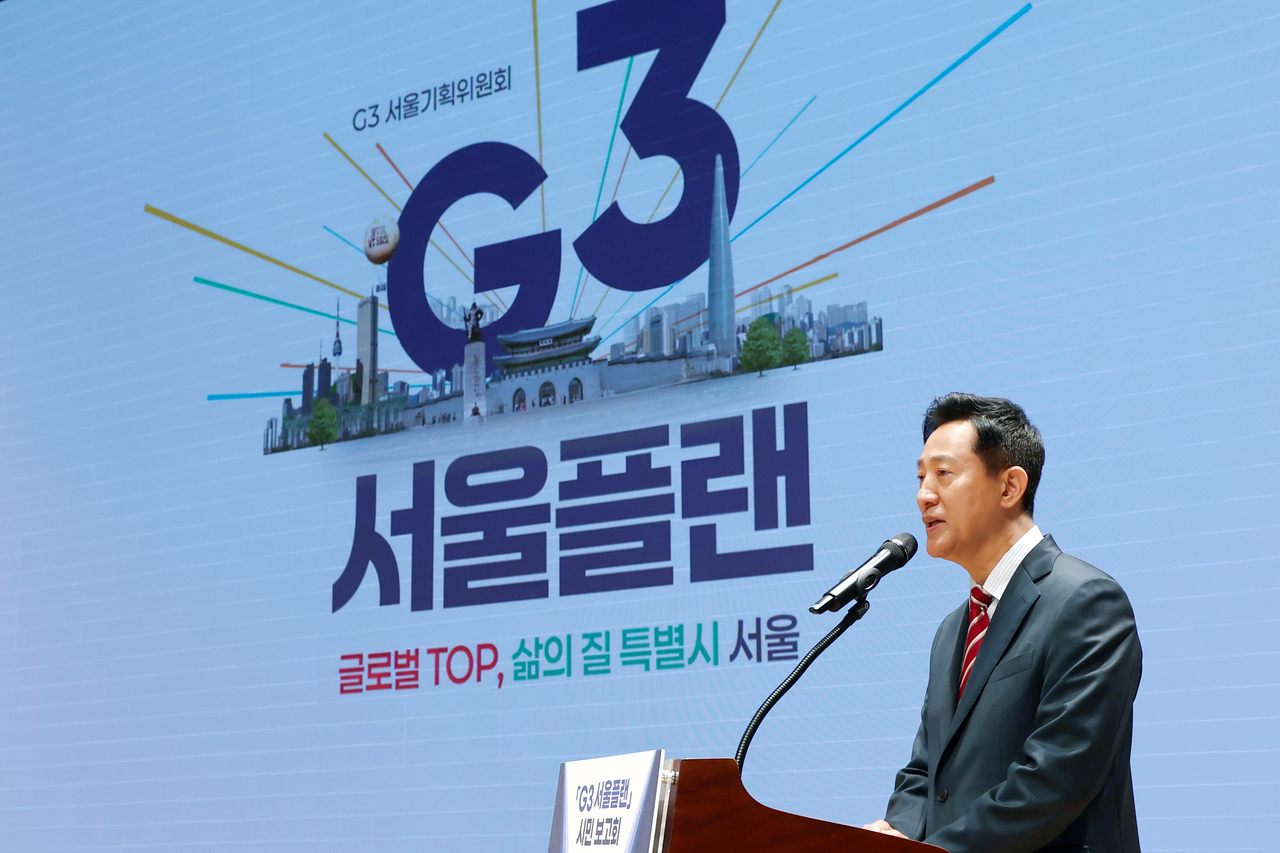
The Seoul Metropolitan Government is betting on global talent and a smoother experience for foreign tourists as it seeks to break into the ranks of the world’s top three cities by 2030.
Under an 86.1 trillion-won ($64 billion) blueprint unveiled Thursday, the city plans to support advanced-degree experts from recruitment through housing and long-term settlement, while developing an all-in-one app connecting overseas payment services with public transportation, tax refunds and tourist information.
The “G3 Seoul Plan,” which runs through June 2030, includes about 100 projects across five areas: health and safety, inclusive growth, housing stability, economic opportunity and urban innovation.
“Becoming a global top-three city is not simply about moving up international city rankings, but about translating Seoul’s competitiveness into a better life for every resident,” Seoul Mayor Oh Se-hoon said Thursday.
Seoul ranked No. 6 in the 2025 Global Power City Index, up from No. 7 in 2022, according to the city government. Compiled by the Tokyo-based Mori Memorial Foundation’s Institute for Urban Strategies, the index compares 48 major cities across six areas, including the economy, culture and livability.
Attracting and retaining international talent is among the plan’s key initiatives.
Seoul will seek to bring in more foreign workers with master’s and doctoral degrees and provide support ranging from recruitment to housing and long-term settlement.
“We saw a need to support international master’s and doctoral students so they can remain in Seoul over the long term and find employment here,” a city official who oversees the project told The Korea Herald.
“The initiative is still at the blueprint stage, but we plan to develop a comprehensive support program so that the students who finished their studies here can get a job and work here if they wish.”
The city also plans to lay the institutional groundwork for gifted students from overseas to attend science high schools. It will also establish a tentatively named “Seoul International House” to promote interaction between young Seoul residents and international students.
As Seoul prepares to receive 30 million foreign tourists annually, the city also plans to make the capital more accessible to international visitors. A proposed integrated payment app, tentatively named “OK-Seoul,” will connect overseas mobile payment services with public transportation, tax refunds and tourist information, according to the city.
Oh said Seoul would draw lessons from New York’s economic strength and talent ecosystem, London’s nighttime economy and Tokyo’s convenient and safe urban environment, while developing policies tailored to the Korean capital’s technological and cultural strengths.
Housing is another major pillar of the blueprint, as high home prices and rising rents continue to burden Seoul residents, particularly young people and newly married couples.
The city aims to begin construction on 310,000 homes through its expedited redevelopment program and 40,000 homes through its small-scale housing renewal initiative by 2031.
It will also supply 130,000 public housing units, including 6,500 homes under the “Baro Nae-jip” public sale program.
The homes will be offered either under a land-lease model, in which buyers purchase the housing unit while leasing the publicly owned land, or through an installment plan that allows them to pay the remaining 80 percent of the purchase price over 20 years.
Another flagship goal is to expand the autonomous bus fleet from the current 16 vehicles to 500 by 2030.
Operating hours will gradually be extended to round-the-clock service following safety reviews. The number of autonomous taxis operating in Gangnam and Sangam will also increase to 50 by 2027.
The G3 Seoul Plan also addresses social isolation in a city where about four in 10 households consist of a single person.
The city recorded 784 lonely deaths in 2024, up sharply from 559 a year earlier, according to the latest survey released by the Ministry of Health and Welfare.
The city will expand community spaces that offer counseling and social activities to all 25 districts, introduce age-specific programs and arrange shared meals for people living alone.
yunapark@heraldcorp.com